
Welcome to your complete guide on mastering search visibility for your online business. If your products aren’t getting the attention they deserve, the solution often starts with understanding what potential customers are typing into search engines.
This process is both a science and an art. It involves finding the precise terms people use when looking for products online. The goal is to weave these terms into your site’s content, from product descriptions to blog posts.
Doing this well increases your chances of appearing in relevant search results. This drives more qualified traffic to your store and ultimately boosts sales. This guide will walk you through a practical, step-by-step approach.
You will learn how to find valuable terms, analyze their potential, and implement them effectively. We will cover the fundamentals of how search engines work and provide real-world strategies. These strategies help prioritize terms that convert browsers into buyers.
Whether you’re launching a new site or improving an existing one, this knowledge is your foundation for long-term organic growth. Let’s begin the journey to making your ecommerce store more visible and successful.
Key Takeaways
- Understanding customer search behavior is the first step to increasing your online store’s visibility.
- Effective SEO for ecommerce involves strategically placing relevant terms throughout your site’s content.
- The right approach attracts visitors who are actively looking to buy, leading to higher conversion rates.
- This process reduces reliance on paid ads by building a sustainable, organic traffic source.
- A clear, actionable plan can help any store, new or established, achieve better search engine rankings.
Introduction to Ecommerce Keyword Research Fundamentals
To truly connect with your audience, you need to dive into the world of digital search patterns. This process helps you understand exactly what phrases potential customers type when looking for products like yours.
Understanding Digital Search Behavior
People use various terms to find the same product. Some might search for “running shoes” while others type “athletic footwear for jogging.” Recognizing these patterns is crucial for capturing all potential visitors.
Search engines like Google work by matching user queries with relevant web content. Your goal is to ensure your store appears when shoppers look for items you offer. Listening to customer language through reviews and feedback reveals valuable insights.
Key Concepts in Keyword Research
Search volume shows how many people look for specific terms monthly. Difficulty indicates how hard it will be to rank for those phrases. Both metrics help prioritize your efforts effectively.
Short-tail phrases like “shoes” are broad but competitive. Long-tail options like “women’s waterproof hiking boots” are more specific and often convert better. Understanding search intent—whether someone is browsing or ready to buy—helps tailor your content appropriately.
The Importance of Keyword Research in Driving Ecommerce Sales
Understanding what shoppers type into search engines is like having a direct line to their purchasing thoughts. Each query reveals specific needs and buying intentions that can transform your store’s performance.
This process connects you with customers at the exact moment they’re looking to solve problems or make purchases. It’s the foundation of effective ecommerce strategy.
Enhancing Product Visibility
Making your items discoverable requires using the exact phrases customers search for. When you optimize product listings with relevant terms, you appear in more specific searches.
For example, including descriptive phrases like “BPA-free water bottle” helps environmentally conscious shoppers find your products. This targeted approach significantly boosts your store’s exposure to qualified buyers.
Driving High-Intent Traffic
Attracting ready-to-purchase visitors is the ultimate goal of smart SEO. Long-tail search terms often indicate stronger buying intent than broad phrases.
Someone searching “best home hospital bed for elderly” is closer to purchasing than someone typing “hospital bed.” Targeting these specific queries brings valuable traffic that converts into sales.
This strategy reduces advertising costs while building sustainable organic growth for your business.
Mastering “shopify keyword research” for Your Store
Transforming casual browsers into loyal customers starts with mastering the language of search. Organic traffic provides sustainable growth without ongoing advertising costs. This free visibility comes from understanding what potential buyers actually type into search engines.
Your ecommerce platform contains multiple page types that need strategic optimization. Product pages should target specific item descriptions. Collection pages work best with broader category terms. Blog content can capture informational searches that lead to future sales.
This approach creates a compounding return on your initial efforts. Once you rank for important terms, traffic continues month after month. Unlike paid campaigns, organic results don’t disappear when budgets run out.
| Traffic Type | Cost Structure | Longevity | Conversion Quality |
|---|---|---|---|
| Organic Search | One-time optimization | Months to years | High intent |
| Paid Advertising | Ongoing payments | While budget lasts | Mixed intent |
| Social Media | Content creation | Days to weeks | Discovery focused |
Effective term analysis also involves understanding seasonal patterns. Optimizing before peak shopping periods helps capture demand when it’s highest. This strategic planning makes your entire digital presence more effective.
Focusing on niche opportunities and specific phrases helps smaller stores compete. Rather than battling for broad competitive terms, target realistic ranking opportunities. This approach builds a foundation for sustainable growth.
Understanding Search Intent and Customer Behavior
Successful ecommerce stores don’t just target search terms—they understand the motivation behind each search. This understanding of search intent is absolutely critical for connecting with the right audience.
There are four main types of search intent you need to recognize. Informational intent occurs when people want to learn something, like “how does noise cancelling work.” Navigational intent happens when they’re looking for a specific website.
Commercial investigation captures users comparing options before buying, such as “best wireless earbuds 2025.” Transactional intent serves those ready to purchase immediately, like searching “buy AirPods Max.”
The key to effective strategy is matching your content type to the search intent. Product pages should target transactional terms. Category pages work well for commercial investigation queries. Blog posts perfectly capture informational searches that build trust.
People often journey from informational searches to commercial investigation to transactional queries. Your approach should capture customers at every stage. This alignment prevents wasted effort optimizing the wrong pages.
Pay attention to what Google shows for each query. The search results page reveals what intent Google has determined. If you see mostly blog posts ranking, your product page won’t break through no matter how well optimized.
Essential Keyword Research Tools and Platforms
The right tools turn the complex task of finding search terms into a streamlined process. They provide accurate data and save you countless hours. This allows you to focus on strategy and implementation.
You have a wide range of options, from completely free utilities to powerful premium suites. The best choice depends on your budget and the stage of your business.
Free Tools: Google Keyword Planner, Search Console, and More
Starting with free options is a smart move. Google Keyword Planner is a foundational tool. It provides monthly search volume and trend data directly from Google’s ecosystem.
Google Search Console is invaluable for seeing your current performance. It shows which phrases your site already ranks for. This reveals immediate optimization opportunities.
Browser extensions like Keyword Surfer overlay data onto your search results. Other free tools, like AnswerThePublic, focus on finding questions users ask.
Premium Options: Semrush, Ahrefs, and Surfer SEO
For growing stores, premium platforms offer deeper insights. They provide extensive data on competition, trends, and content gaps.
Semrush and Ahrefs are industry leaders. They offer comprehensive analysis of search volume, difficulty, and competitor strategies.
Surfer SEO uses artificial intelligence to guide content creation based on top-performing pages. These tools represent a significant investment but can accelerate growth.
| Tool Type | Primary Use | Cost Example | Best For |
|---|---|---|---|
| Free Tools | Basic volume data, site performance | $0 | Beginners, initial research |
| Browser Extensions | Quick, on-the-fly data | $0 – $10/month | Convenience, supplemental data |
| Premium Suites | Competitor analysis, advanced metrics | $49 – $450/month | Established stores, competitive markets |
This comparison helps you select the right resources for your needs and budget. Starting with free tools is perfectly effective for building a solid foundation.
A Step-by-Step Guide to Optimizing Your Shopify Store
The journey to better search rankings starts with creating a comprehensive list of relevant phrases. This practical approach transforms theoretical knowledge into actionable steps that drive real results.
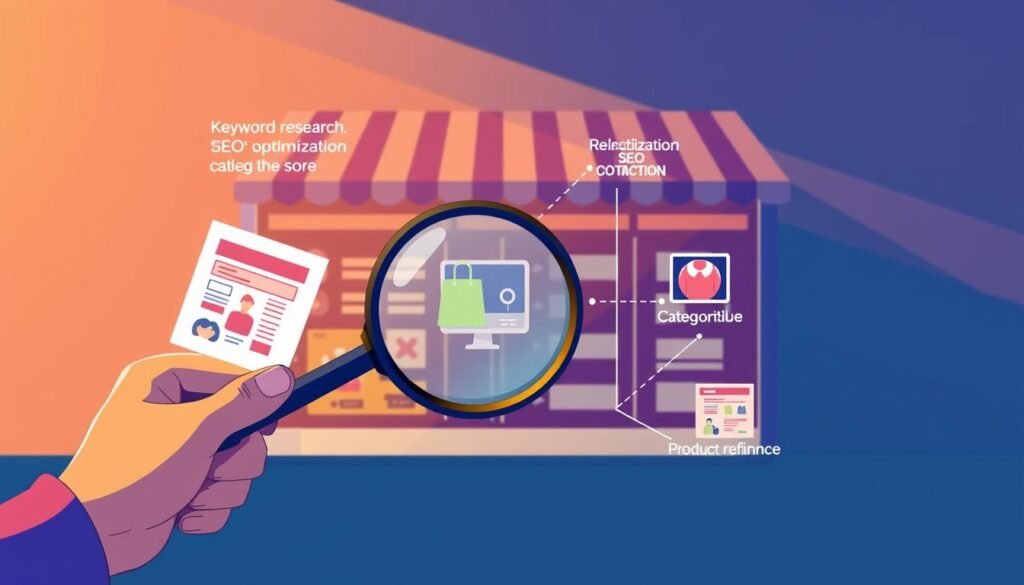
Brainstorming and Seed Keyword Generation
Begin by listing broad terms related to your products and categories. Think beyond product names to include features, benefits, and use cases.
Consider how customers actually describe your offerings. They might use “gym shoes” instead of “training shoes.” This customer perspective reveals authentic search language.
Expanding Your Keyword List
Use specialized tools to generate hundreds of related terms from your initial ideas. These platforms provide valuable metrics like search volume and competition levels.
Don’t overlook customer conversations in reviews and support tickets. Phrases like “fits well for wide feet” often indicate valuable search terms worth targeting.
Google’s Autocomplete and “People Also Ask” features offer additional inspiration. These suggestions reflect actual user queries and interests.
Analyzing Keyword Metrics: Volume, Competition, and Difficulty
After building your initial list of potential search terms, the real work begins with careful metric analysis. This step helps you prioritize which phrases offer the best return on your optimization efforts.
Three key factors determine a term’s value: search volume, competition level, and difficulty score. Balancing these elements ensures you target opportunities that match your store’s current authority.
Interpreting Search Volume Data
Search volume shows how many people look for a specific phrase each month. Higher numbers suggest greater traffic potential if you can achieve good ranking positions.
However, volume alone can be misleading. A term with 50,000 monthly searches might seem perfect until you discover major brands dominate the results. For newer stores, moderate volume terms often deliver better outcomes.
Assessing Keyword Difficulty
Difficulty scores estimate how challenging it will be to rank on the first page. These metrics typically range from 0 to 100, with higher numbers indicating stronger competition.
Look at who currently ranks for your target phrases. If the top results feature established retailers, that term likely has high difficulty. Long-tail options with specific intent often have lower competition while attracting ready-to-buy visitors.
For example, “best running shoes for overpronation under $150” might have lower search volume than “running shoes” but converts better and ranks easier. This strategic approach builds momentum with achievable wins while planning for longer-term opportunities.
Competitor Analysis and Identifying Keyword Gaps
Competitor analysis reveals hidden opportunities where you can capture traffic currently going to rival stores. This approach gives you a proven roadmap by showing what already works for similar businesses.
Begin by identifying three to five direct competitors who target similar audiences. Use professional SEO tools to analyze which search terms drive the most visitors to their websites.
Audit Competitor Keyword Strategies
Platforms like Semrush and Ahrefs let you enter competitor URLs to see their ranking terms. You can sort these by traffic share to identify their most valuable phrases.
Keyword gap analysis specifically shows terms your competitors rank for that you don’t. These gaps represent immediate opportunities to attract customers currently going elsewhere.
For example, if a competitor ranks well for “ergonomic standing desk converter” but you don’t target this phrase, you’ve found a clear gap. You can optimize your product pages or create content to compete.
Look beyond just the terms themselves. Examine how competitors use these phrases in titles, descriptions, and content structure. This reveals what helps them achieve good rankings.
Use competitor insights as inspiration rather than copying directly. Look for related terms they might be missing or ways to create better content. Targeting overlooked phrases can be more valuable than fighting for competitive terms.
Make this analysis an ongoing process. Competitors constantly evolve their strategies, so quarterly reviews help you stay competitive and identify new opportunities.
Mapping Keywords to Your Content and Product Strategy
The real power of search term discovery comes from thoughtful placement across your digital presence. Think of each page as a solution waiting for the right question.
Your goal is to match phrases with the most relevant page type based on user intent. This creates a perfect alignment between what people seek and what they find.
Aligning Keywords with Product Pages
Product pages should target transactional terms that indicate buying readiness. These are phrases like “buy ergonomic mesh office chair” or specific product names.
Each product page needs one primary term and several related secondary terms. This captures different ways people might search for the same item.
Category pages work better with broader commercial intent phrases. Think “office chairs” rather than specific models.
Integrating Keywords in Blog and Content Marketing
Blog content captures people in research mode. They’re comparing options or learning about solutions.
For example, a guide on “how to choose running shoes for flat feet” builds trust. It naturally leads readers to relevant product pages.
This approach serves multiple purposes. It attracts early-stage researchers and establishes your authority.
Supporting pages like FAQs and buying guides target valuable long-tail questions. Every page should have a clear purpose matching its target phrases.
On-Page SEO Techniques for Shopify Stores
Putting your carefully selected search terms into action is where your SEO strategy truly comes to life. This process, known as on-page optimization, involves placing your target phrases in specific locations on your web pages.
These placements send clear signals to search engines about your content’s relevance. The goal is to help your pages rank higher in the search results.
Start with your product titles and descriptions. Your primary term should appear naturally in the title. Weave it and related phrases throughout the description without awkward repetition.
Your page headings are also crucial. Include your main phrase in the H1 tag. Use secondary terms in H2 and H3 subheadings to reinforce the topic.
Meta titles and descriptions are what users see in the search engine results. Write compelling, concise snippets that include your target phrase. This improves both visibility and click-through rates.
Don’t forget your URL structure. Create clean, readable URLs that include relevant terms. For example, use “/products/blue-running-shoes” instead of a string of numbers.
Image optimization is another powerful technique. Use descriptive file names and alt text for your pictures. This helps with accessibility and can bring traffic from image searches.
Finally, build a strong internal linking strategy. Connect related products and categories using descriptive anchor text. This guides users and helps search engines understand your site structure.
Remember, the key is natural integration. Focus on creating helpful content for your visitors, and the optimization will follow.
Keeping Your Keyword Strategy Up-to-Date
Maintaining a competitive edge requires treating your search strategy as an evolving process rather than a one-time project. Customer behavior shifts constantly, new competitors emerge, and your product offerings change over time.
Monitoring Trends and User Behavior
Regular monitoring helps you stay ahead of the curve. Set up a quarterly schedule for comprehensive audits of your entire approach.
During these audits, review current rankings using tools like Google Search Console. Analyze which terms drive actual conversions, not just traffic. Identify pages that need optimization refreshes.
Between quarterly reviews, conduct monthly check-ins. If you notice a page’s performance dropping, investigate whether competition increased or user intent shifted.
AI platforms make trend monitoring more predictive. Tools like Exploding Topics show rising interest in phrases weeks before they peak. This gives you a head start on creating optimized content.
Keep adding newly discovered terms to your master list as you find them. Treat this document as a living resource that continuously grows. This balanced approach protects existing rankings while finding new opportunities.
Conclusion
You’ve now built a solid foundation for improving your online store’s visibility. This guide has given you the tools to understand what your customers are looking for and how to connect with them.
Remember, the goal is to create a website that truly serves your audience. By focusing on the right words and phrases, you can attract visitors who are ready to buy. This process builds a steady stream of traffic over time.
Start with small, manageable steps. Focus on optimizing a few key pages first. Track your progress and adjust your approach based on what you learn. This method builds momentum for your business.
The most successful online stores treat SEO as an ongoing conversation with their customers. Keep listening, learning, and improving. Your consistent effort will lead to lasting results and a stronger online presence.